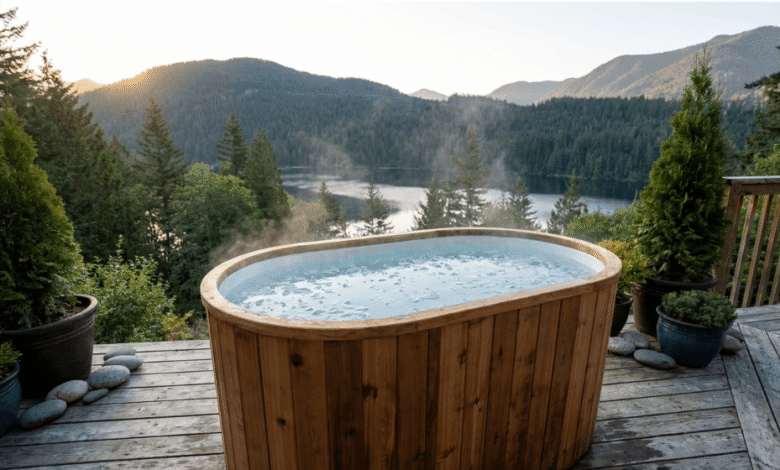
Wood-clad cold plunge tubs need a cleaning routine built around gentle products and a real drain schedule, not scrubbing harder when the water starts looking cloudy. A full drain and deep clean every 4 to 8 weeks for a filtered, sanitized tub, mild soap and a soft brush on the wood exterior, and a fresh coat of sealant once or twice a year keeps both the water and the cladding in good shape without spending money on specialty products the tub does not actually need.
What Actually Damages Wood Cladding Over Time?
The biggest culprits are harsh bleach solutions used at full strength, undiluted vinegar left sitting on the wood surface for extended periods, and abrasive scouring pads that scratch through the protective sealant layer. Once that sealant is compromised, the wood underneath absorbs moisture unevenly, which is what leads to cracking, graying, or swelling over a season or two. None of this happens from a single cleaning, it builds from repeated harsh treatment, which is exactly why a gentler routine done consistently beats an aggressive scrub-down done occasionally.
How Often Does a Filtered Tub Actually Need a Full Drain?
For a tub running a filter and some form of ongoing sanitizer, chlorine, bromine, or ozone, a full drain, wipe-down, and refill every 4 to 8 weeks is a reasonable budget schedule for regular use, several sessions a week. Between full drains, a simple skim for debris and a quick sanitizer test strip check keeps things running without extra cost. An unfiltered stock-tank setup with no sanitizer is a different story entirely and typically needs a full water change every few days to a week, since there is nothing keeping bacteria in check between uses.
What’s the Actual Cleaning Routine for the Interior?
Between full drains, wipe down the interior surface with a soft cloth and mild, unscented soap if any film has built up, then rinse thoroughly so no soap residue ends up in the water. Avoid anything abrasive on interior wood or wood-adjacent surfaces, since scratches create places for bacteria and grime to collect that a smooth sealed surface would resist. A basic pool skimmer net, often under $15, handles leaves and debris on open outdoor tubs and takes thirty seconds after each use.
How Should the Exterior Wood Actually Be Cleaned?
A soft brush and a garden hose handles most exterior grime without any risk to the sealant. Pressure washers should stay off the wood exterior entirely, since the force can drive water past the sealant and directly into the wood grain, which accelerates exactly the kind of damage a good cleaning routine is supposed to prevent. For stubborn dirt or mildew spots, a diluted mild soap solution applied with the same soft brush, rinsed promptly, is the budget-safe option over any specialty wood cleaner.
Does Ozone or Chlorine Treat the Wood Differently?
Ozone systems tend to be gentler on both skin and wood cladding over time, since ozone breaks back down into oxygen rather than leaving a chemical residue that can interact with sealant over months of exposure. The tradeoff is upfront cost, an ozone generator adds a few hundred dollars to a build compared with a basic chlorine or bromine dosing routine, which remains the more common budget choice for tubs that see moderate rather than daily use. Either sanitizer approach works fine on wood as long as dosing stays within the manufacturer’s recommended range rather than over-treating out of caution.
Does an Outdoor Location Change the Cleaning Routine?
Sun and weather exposure add their own wear pattern on top of whatever the water itself does. Direct sunlight fades and dries out wood over a season, which is part of why sealant needs reapplying more often on an uncovered outdoor tub than one kept under a patio roof or pergola. In freezing climates, wood cladding left wet and exposed through repeated freeze-thaw cycles is more prone to small surface cracks than the same wood kept dry and covered between uses, so a simple fitted cover earns its cost back in reduced sealant and repair work over a few winters.
What Does Resealing Actually Involve, and How Often?
Most manufacturers recommend reapplying an exterior wood sealant or oil once or twice a year, leaning toward twice in humid climates or for any tub that sits fully exposed to rain and sun without a cover. The process itself is straightforward, clean and dry the wood fully, apply a thin even coat with a brush or cloth, and let it cure per the product’s instructions before the next use. Skipping this step is one of the more common ways budget owners end up with premature wood damage that a fifteen-dollar bottle of sealant could have prevented. Buyers comparing wood-clad models against lower-maintenance shell materials before buying can view current pricing across both types to weigh upfront cost against this kind of ongoing upkeep.
What Does the Research Say About the Water Itself, Separate From Upkeep?
None of this maintenance routine changes what the underlying research shows about cold water immersion, which is honestly mixed rather than a guaranteed benefit regardless of how well the tub is maintained. A 2025 systematic review and meta-analysis in PLoS One found inconsistent results across health and wellbeing outcomes tied to cold water immersion. A Cochrane review on cold-water immersion for muscle soreness after exercise found a modest reduction in soreness with low-certainty evidence, and a 2023 meta-analysis in Frontiers in Physiology reported some benefit for fatigue recovery and exercise performance following cold water immersion after exercise. Clean water and well-maintained wood keep a tub pleasant and functional, but they do not change what the physiological evidence itself supports.
Frequently Asked Questions
What cleaning products damage wood-clad cold plunge tubs?
Harsh bleach, undiluted vinegar left sitting, and abrasive scouring pads strip the protective sealant and leave wood vulnerable.
How often should you fully drain and clean a home cold plunge?
Every 4 to 8 weeks for a filtered, sanitized tub. Unfiltered stock-tank setups need a full change every few days to a week.
Is ozone or chlorine gentler on wood cladding?
Ozone tends to be gentler over time, though it costs more upfront than a basic chlorine or bromine dosing routine.
Do you need to reseal wood cladding on a cold plunge regularly?
Most manufacturers recommend resealing once or twice a year, more often in humid climates or without a cover.
Can you use a pressure washer to clean a wood-clad cold plunge?
Not on the wood exterior. A soft brush and a garden hose is the safer approach that will not force water past the sealant.
References
- “Effects of cold-water immersion on health and wellbeing: A systematic review and meta-analysis.” PLoS One, 2025. https://pubmed.ncbi.nlm.nih.gov/39879231/
- “Cold-water immersion (cryotherapy) for preventing and treating muscle soreness after exercise.” Cochrane Database of Systematic Reviews, 2012. https://pubmed.ncbi.nlm.nih.gov/22336838/
- “Effects of cold water immersion after exercise on fatigue recovery and exercise performance: meta analysis.” Frontiers in Physiology, 2023. https://pubmed.ncbi.nlm.nih.gov/36744038/
- By Owen Bracewell